Introduction
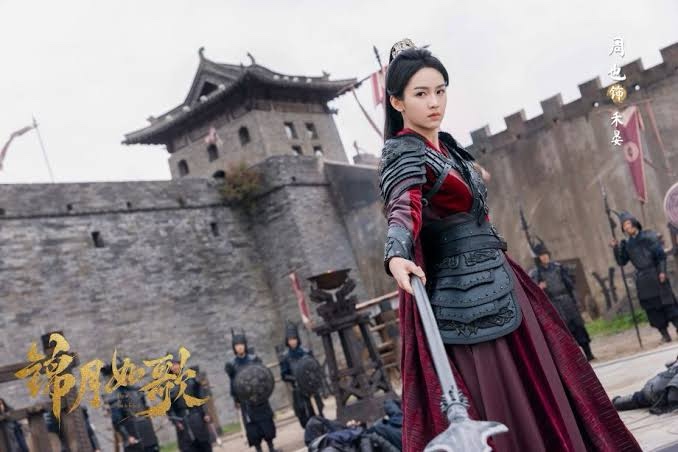
Inspired by the Chinese historical drama The Legend of the Female General, this essay examines the figure of He Yan, the eldest daughter of the He family, who disguises herself as her brother to join the army and defend her family’s honor. As the Feihong General, He Yan demonstrates courage, strategic brilliance, and leadership, earning recognition across the empire. Yet beneath her armor lies profound solitude: her achievements are built on deception, familial betrayal, and the concealment of her true identity.
What makes He Yan’s story compelling is not only her bravery but how her strength is defined. Valor is measured through stoicism, emotional restraint, and self-sufficiency; qualities that, while admirable, raise critical questions about the costs of being labeled “strong.” This essay interrogates what I term the Strong Woman Fallacy: the tendency to equate female empowerment with invulnerability and the suppression of vulnerability.
While the drama celebrates He Yan’s defiance of patriarchal boundaries, it also illustrates how cultural narratives often confine women’s strength within masculine-coded ideals. Her power is validated by her ability to endure, conceal, and persevere alone. Drawing on feminist theory, this essay explores how The Legend of the Female General both mirrors and critiques these expectations, ultimately offering a more nuanced understanding of strength that integrates vulnerability, relationality, and emotional authenticity.
As Simone de Beauvoir (1949/2011) famously argued, womanhood has long been constructed in relation to man, as the Other. Thus, even when women occupy positions of power, they are often validated through their capacity to perform strength in terms that patriarchy recognizes: control, composure, and detachment.

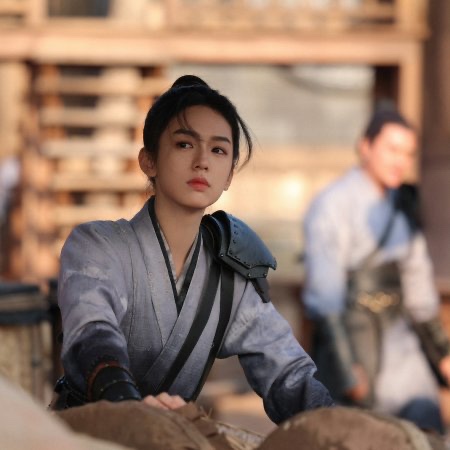

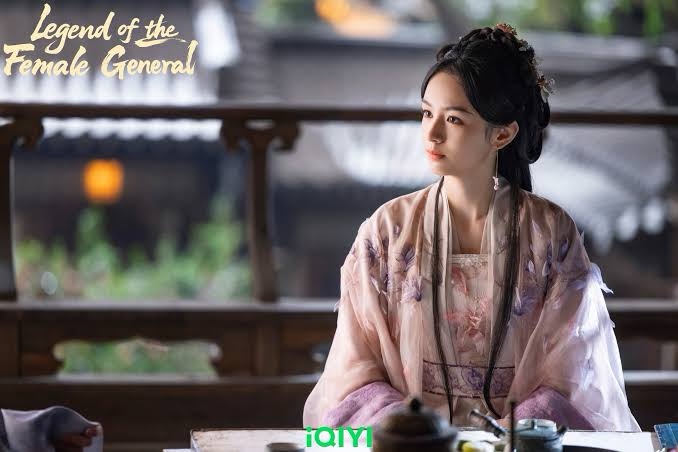
At the same time, the series complicates this fallacy through He Yan’s emotional arc. Her journey is not one of mere endurance, but of reclamation: reclaiming agency after betrayal, rediscovering selfhood beneath disguise, and learning to trust and connect again. These narrative moments invite a more nuanced understanding of strength, one that does not erase vulnerability but integrates it. The drama thereby functions both as a reflection of and resistance to the Strong Woman Fallacy, illustrating the struggle of women who are forced to perform invincibility in a world that punishes emotional truth.
The Strong Woman Fallacy
Definition
The Strong Woman Fallacy is the conceptual error of defining female empowerment solely through stoicism, independence, and emotional restraint. It assumes that a woman is “strong” only when she endures without breaking, leads without needing support, and conceals emotional truths (hooks, 2000; Gilligan, 1982). This perspective erases the relational and affective dimensions of power, equating vulnerability with weakness and interdependence with fragility.
Media Representation
Within media narratives, the “strong woman” archetype is often a figure who endures pain in silence, resists dependence, and prioritizes composure over emotional authenticity. This figure, while appearing subversive, ultimately reproduces patriarchal standards of worth, valorizing control, restraint, and emotional discipline.
As Judith Butler (1990) observes, gender operates performatively: it is constituted through repeated acts that conform to social expectations. The strong woman archetype performs power by rejecting the feminine-coded traits of tenderness and emotionality, thereby aligning with the masculine ideal of rational dominance. The fallacy lies not in her strength, but in the limited script of what “strength” is permitted to mean.
Cultural Implications
The Strong Woman Fallacy sustains patriarchal binaries: reason over emotion, independence over care, composure over expression. As bell hooks (2000) argues, systems of domination often commodify feminist ideals, turning empowerment into a palatable form of control. In doing so, society celebrates women who embody “strength” only when that strength remains compatible with existing hierarchies, when it does not threaten, grieve, or need.
Yet, such portrayals neglect an essential truth: that strength can coexist with vulnerability, and that emotional transparency can be a radical act of defiance. He Yan’s story illustrates this tension vividly. Her disguise as a man affords her access to the battlefield but also strips her of emotional authenticity. Her triumphs demand that she conceal pain, affection, and fear. In surviving by suppression, she embodies both the endurance and the cost of the fallacy.
The Legend of the Female General as Reflection and Critique
He Yan’s life encapsulates the paradox of the Strong Woman Fallacy. Her courage and leadership are undeniable, but her sacrifices are immense; her family betrays her, her identity is erased, and her sense of belonging is fractured. Her public image as a general is built upon the annihilation of her private self.
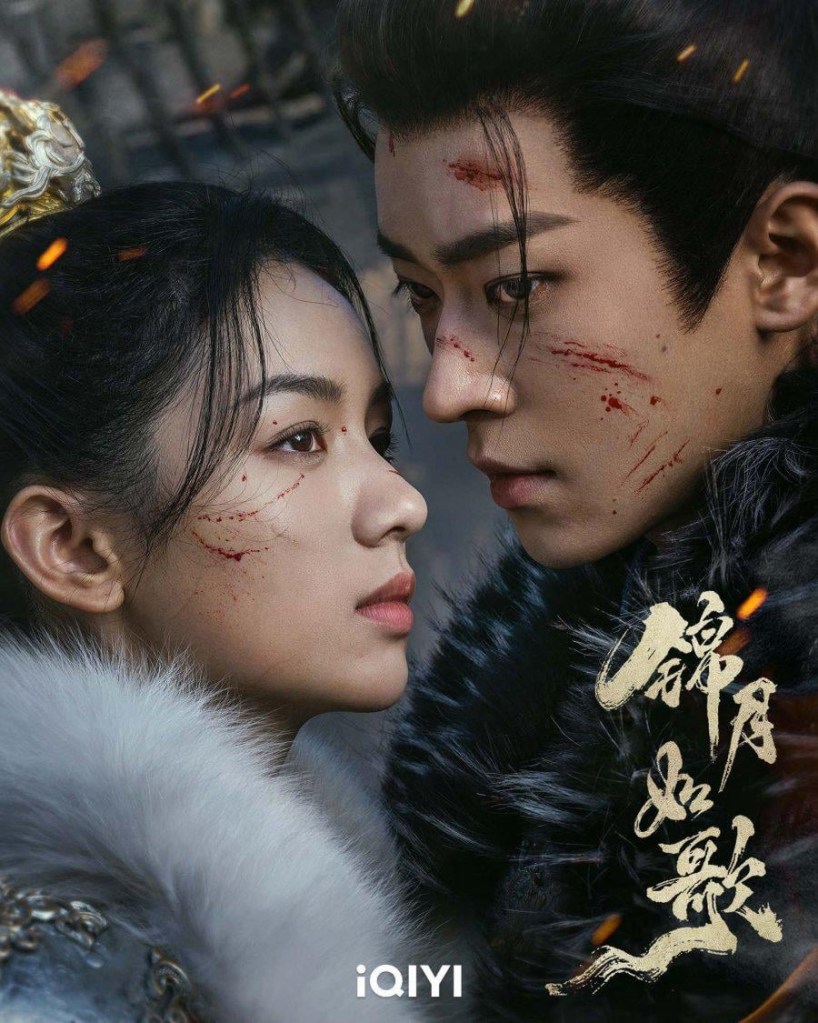

Yet, the series does not leave her trapped in this cycle of stoic performance. Through her encounters with Xiao Jue and her gradual re-entry into emotional life, He Yan learns to redefine strength not as suppression, but as self-reclamation. In moments of grief and forgiveness, she asserts a different kind of power, the ability to feel deeply and still move forward. These instances disrupt the cultural logic that conflates emotion with fragility, revealing instead that vulnerability is the site of courage, not its opposite.
In this sense, the drama functions as both mirror and critique. It mirrors societal expectations that women must endure silently to be deemed worthy, yet it critiques this expectation by allowing its protagonist to evolve beyond it. He Yan’s eventual confrontation with her past, her decision to reclaim her name and humanity, signals the breaking of the fallacy.
Redefining Strength Without Committing the Fallacy
Without committing the Strong Woman Fallacy, strength can be redefined as the capacity to remain whole while being open to hurt, to love despite risk, and to lead with empathy rather than detachment. True strength lies not in the denial of pain but in the courage to confront it.
A “strong woman” is not one who hides emotion, but one who owns it; not one who stands alone, but one who understands when to lean on others. In the words of Brené Brown (2012), vulnerability is not weakness but it is “the birthplace of courage, creativity, and change.”
Through this lens, He Yan’s evolution represents a reclamation of feminine strength from patriarchal confinement. Her journey from disguise to self-acceptance demonstrates that empowerment is not a performance of hardness, but an affirmation of complexity: to be both resolute and tender, disciplined and human.
Conclusion
The Legend of the Female General offers a compelling case study of how narratives of female heroism often oscillate between empowerment and entrapment. He Yan’s story embodies the Strong Woman Fallacy, her valor is predicated on silence, her honor on concealment. Yet the series also destabilizes this fallacy by portraying her emotional reawakening, her willingness to confront betrayal, and her pursuit of authenticity after years of self-effacement.
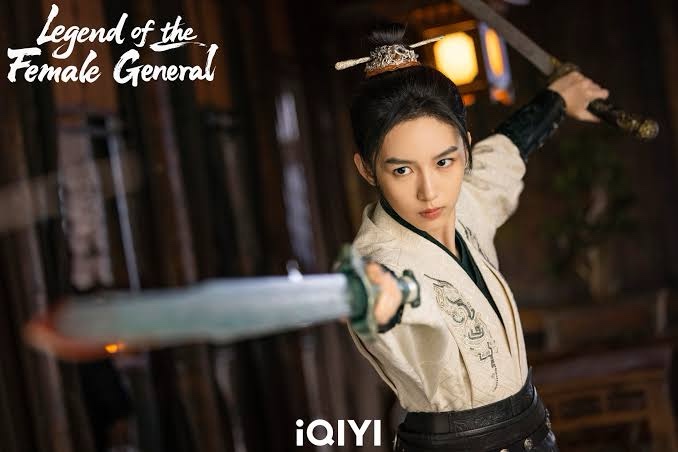
The drama’s visual and narrative language, armor, battlefields, shifting identities, serves as metaphor for the modern woman’s struggle to reconcile power with emotional truth. It challenges viewers to ask: Must strength always mean suppression? Can a woman be both fierce and feeling, disciplined and vulnerable, victorious and still human?
By drawing these tensions to the surface, The Legend of the Female General becomes not only a historical tale of war and honor but a philosophical reflection on womanhood itself. It reminds us that the measure of strength is not endurance alone, but the ability to embrace one’s full emotional and moral complexity.
To dismantle the Strong Woman Fallacy is to allow women, fictional and real alike, to exist in their entirety: flawed, feeling, resilient, and profoundly human.
References (APA 7th Edition)
Ahmed, S. (2017). Living a Feminist Life. Duke University Press.
Brown, B. (2012). Daring Greatly: How the Courage to Be Vulnerable Transforms the Way We Live, Love, Parent, and Lead. Gotham Books.
Butler, J. (1990). Gender Trouble: Feminism and the Subversion of Identity. Routledge.
de Beauvoir, S. (2011). The Second Sex (C. Borde & S. Malovany-Chevallier, Trans.). Vintage. (Original work published 1949)
Gilligan, C. (1982). In a Different Voice: Psychological Theory and Women’s Development. Harvard University Press.
hooks, b. (2000). Feminism is for Everybody: Passionate Politics. South End Press.

 Love, Ana 💋
Leave a comment